Why a Casino Near-Miss Feels Like an Almost-Win
A casino near-miss can make a loss feel like progress. Learn how symbols, paylines and sound shape that impression, and how to read the result plainly.
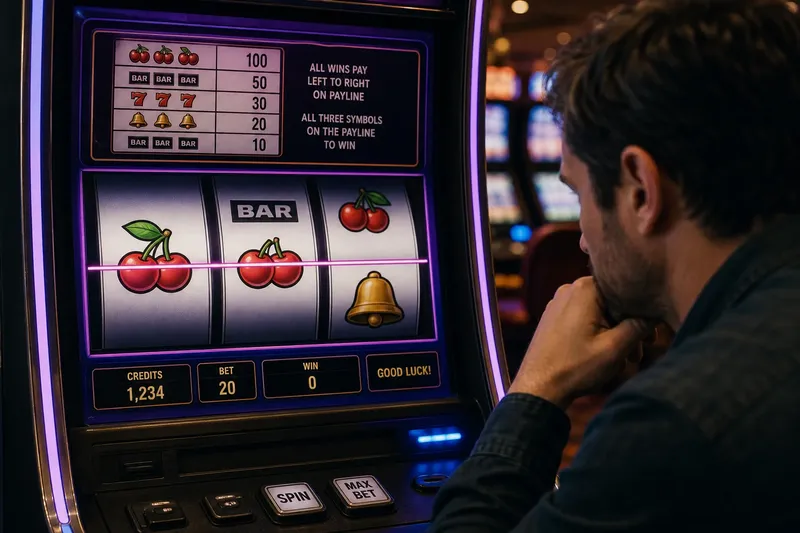
A casino near-miss can make a losing spin feel like progress. Two matching symbols beside a payline are easy to read as an almost-win, even when the game’s rules count the result as an ordinary loss.
That impression comes from presentation: the eye spots a familiar pattern, while sound and animation can give the moment extra drama. The useful question is not how close the symbols look, but what the paytable says happened.
What makes a casino near-miss look close?
A near-miss is a losing result that resembles a winning pattern without meeting its stated conditions. On a slot screen, two matching symbols may appear on a payline while the third sits just above or below it. In a card game, a hand may fall short of a listed combination.
“Almost” describes the appearance, not a separate payout category. If the symbols do not meet the required combination and positions, the result is a loss. Check the paytable rather than letting the animation supply its own verdict.
How do paylines and animations shape the impression?
A payline gives the eye a route across the screen. When symbols on that route resemble a winning pattern, a nearby symbol can seem especially significant. A pause, flourish or celebratory sound may heighten the moment, but none changes whether the result qualifies under the rules.
Imagine a fictional slot display showing two cherries on a marked line and a third cherry just above it. The player checks the paytable, sees that the listed combination requires all three on the line, and records the screen as a loss. The observable result is clear: the symbols looked close, but the required pattern was absent.
Read the line and the symbols, not the drama around them.
Why can a near-miss feel like a forecast?
People naturally notice patterns and unfinished sequences. A display that resembles a prize can therefore invite the thought that the next spin will complete it. That thought is a response to the image, not information contained in the image about what comes next.
Whether earlier events affect later outcomes depends on the game’s rules and process. In an independent game, a previous near-miss does not make the next result more favourable. In a game where visible cards or player choices affect decisions, those details may matter under the rules; a close-looking loss on a slot display is not the same kind of information.
What do players ask about casino near-misses?
Does a near-miss mean the game is warming up?
No. “Warming up” is a description of how a sequence feels, not evidence that a later result is more favourable. Read the game’s stated rules rather than treating an animation as a forecast.
Was a win nearly awarded when the symbols were close?
The display shows a result that resembles a winning pattern. Appearance alone does not reveal how the outcome was generated; the paytable tells you whether the shown combination qualifies for a prize.
Should I increase my stake after an almost-win?
A near-miss is not a sound reason to raise a stake. If you choose to gamble, make spending decisions separately from the visual drama and stop if you are no longer following your own limits.
Can earlier events matter in other games?
They can matter when a game’s rules make visible information or player choices relevant to later decisions. Check those rules and distinguish actionable game information from a previous result that merely looked close.
How can you read a near-miss without chasing it?
Use the screen and rules to make a plain decision. Each check below pairs an observation with a next action; if the first condition is absent, use the alternative rather than guessing from the animation.
- Check the payline against the paytable; if every required symbol and position matches, verify the listed award, and if not, record the result as a loss.
- Check whether the game displays a named winning combination; if it does, confirm it in the rules, and if it does not, do not treat visual similarity as a payout.
- Check whether you want to raise your stake because the last result looked close; if you do, keep to the stake chosen before play or stop, and if you do not, continue only within your prior plan.
- Check the personal time limit you set before playing; if you have reached it, end the session, and if you have not, decide whether to continue without using the near-miss as a reason.
- Check whether frustration or excitement is making your plan hard to follow; if it is, pause or leave, and if it is not, make the next choice from your original limits.
- Check the rules for any information from earlier turns that affects a later decision; if such information is stated, use it as the rules allow, and if not, treat the near-miss as a past display rather than a clue.
These checks do not improve the odds; they keep the decision tied to the rules and your own boundaries. If gambling is causing financial strain or feels difficult to control, consider speaking with a qualified support service or health professional.
What does a near-miss actually tell you?
A near-miss tells you that the displayed loss resembled a winning pattern. It can also show how a payline, symbols and animation combine to make that result feel unfinished. It does not, by itself, tell you that a win is approaching.
When a casino near-miss catches your eye, check the required symbols and positions, then decide without letting the screen’s sense of almost override the rules.