What the House Edge Describes, and What It Leaves Out
The house edge explains a game’s expected return under stated rules, helping you compare its design without mistaking the figure for a session forecast.

The house edge describes a casino game’s long-run design, not the result of your next session. It can help you compare games, provided you know which rules and decisions the quoted figure assumes.
Read it as one part of a game’s description. The figure does not predict your personal outcome, explain every swing in a balance or tell you whether playing suits your circumstances.
What does the house edge describe?
The house edge is the game’s mathematical advantage under specified rules, expressed in relation to the bets made. It is a property of a particular game configuration, not a promise about an individual player’s result.
In a simplified model, each possible outcome has a probability and a payout. Weight each outcome by its probability to calculate the expected return; the difference between the stake and that return is the house edge, using the convention stated by the game. Some descriptions give the player’s expected return instead, so check which figure you are reading.
The calculation concerns repeated play in the mathematical model. It is not a schedule of losses that a player will personally follow.
Which rules shape the house edge?
A game’s name alone does not identify its house edge. Payouts, eligible outcomes and decision rules matter, and changing any of them can change the calculation even if the table or screen looks familiar.
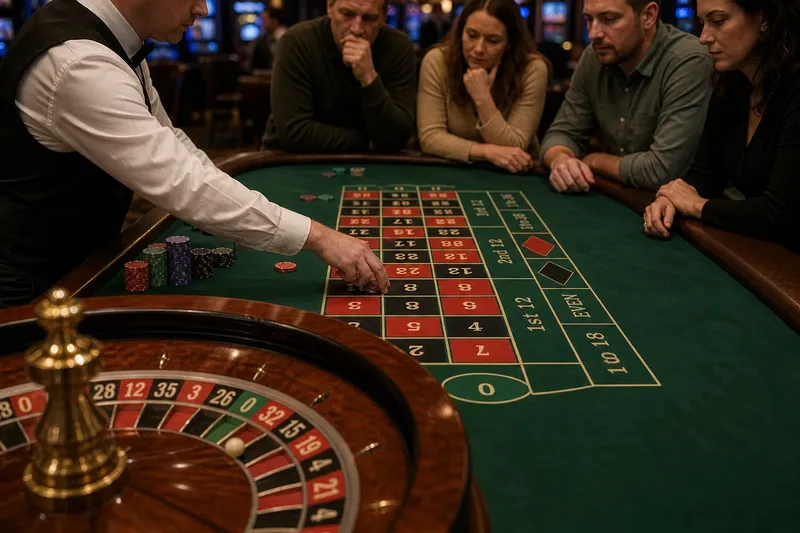
In blackjack, the result depends on table rules and player decisions. The payout for a natural blackjack, whether the dealer draws on a soft seventeen, and options such as doubling or splitting can all matter. A quoted figure may assume a particular strategy; playing differently changes the expected result.
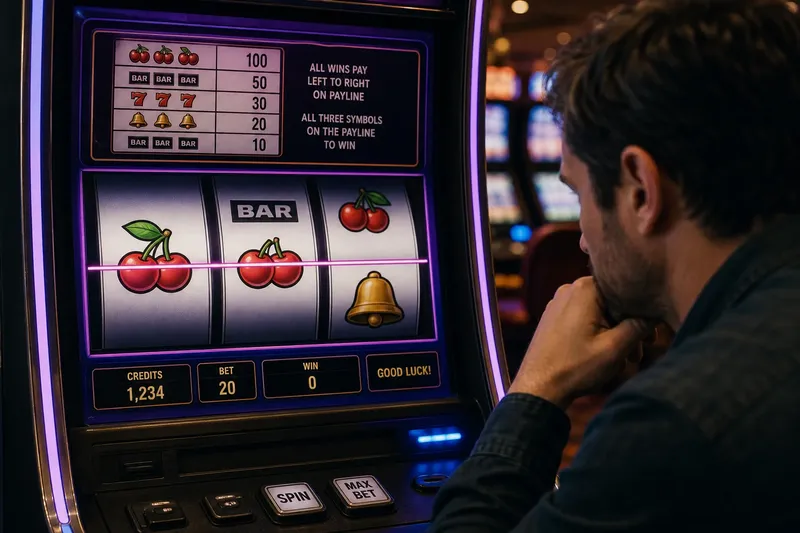
For a slot machine, check the game’s paytable and any published information about its rules. For a table game, look for the posted rules or ask the dealer. If a game label or local rule is unclear, check the relevant official information rather than relying on a generic figure.
Compare the actual rules, not just the game’s title.
Why can a session differ from the average?
An average is not a sequence of promised outcomes. A player can leave ahead after favourable results or use up their stake quickly, even when the game’s long-run expectation favours the house. A short session cannot establish what the game’s design implies across repeated play.
Say you bring a fixed amount to an invented blackjack session and follow a consistent strategy. You play a short run of hands and stop when your pre-set limit is reached: if the run is favourable, you may leave with some of your stake intact or ahead; if it is unfavourable, you may reach the limit sooner. The observable result is your balance when you stop, not a revision to the game’s underlying edge.
The spread of possible results matters as well. Two games with similar expected returns can produce different patterns: one may involve more frequent small changes, while another may have sharper swings. The house edge alone does not describe this variation, often called volatility.
What does the house edge leave out?
The house edge leaves out the personal details of a session: how long someone plays, how often and how much they bet, which decisions they make, and when they stop. The same theoretical edge can sit alongside very different experiences.
It does not say how likely you are to finish a particular session ahead or how far your balance might move before you leave. Those questions need more information about possible outcomes and how the game is played. A model can describe possibilities, but it cannot specify an individual result.
Nor does the figure measure entertainment, atmosphere or personal value. Those are separate judgements; they do not change the game’s financial expectation.
How can you check a house-edge claim?
Use these checks to decide whether a quoted figure applies to the game you are considering:
- Game and version: Check the exact game name and version. If they match the claim, continue checking the rules; if they do not, find information for the version in front of you.
- Payouts: Compare the posted paytable or payout rules with those named in the claim. If they match, keep the figure in consideration; if they differ, treat the claim as inapplicable and seek one for the displayed terms.
- Eligible outcomes: Check which outcomes count and which are excluded. If the conditions match, proceed; if they do not, ask the venue or consult the game’s official rules before comparing figures.
- Player decisions: Look for any strategy assumption, especially for games such as blackjack. If you expect to make those decisions, the assumption may be relevant; if not, do not treat the quoted edge as your expected result.
- Figure type: Check whether the description gives the house edge or the player’s expected return. If the type is clear, compare like with like; if it is missing, seek clarification rather than treating the terms as interchangeable.
- Scope: Check whether the claim describes the game under stated conditions or implies a personal session forecast. If it states its conditions, use it only for that comparison; if it predicts your visit, treat that prediction with caution and consult the rules instead.
Imagine you are comparing two hypothetical blackjack tables. Table A’s placard says the dealer stands on soft seventeen and pays three to two for a natural; Table B’s says the dealer hits soft seventeen and pays six to five. You check each table’s rules, note that the payout and dealer action differ, and find that a strategy assumption is not stated for either. Your decision is not to rank them using a single unqualified edge claim: seek figures calculated for each table’s exact rules and stated strategy, or compare the posted terms without treating either figure as a forecast of your session.
What do players often ask about the house edge?
Does a lower house edge mean I will lose less in one visit?
Not necessarily. It describes a more favourable mathematical expectation under the stated rules, not the outcome of a single visit, where chance can dominate.
Can a player’s strategy change the house edge?
In games with meaningful decisions, strategy can change the expected result compared with another way of playing. Check the assumptions behind a quoted figure before applying it to your own decisions.
Is the house edge the same as a casino’s profit?
No. The house edge describes a game’s theoretical advantage under specified conditions. A casino’s actual income depends on the play that takes place and other business factors.
Does the house edge reset after a win?
A win does not, by itself, change the game’s rules or underlying expected return. It changes your current position; the edge remains a description of the game’s design.
How should you use the house edge?
Use the house edge to understand and compare game designs under matching conditions, not to choose a bet on the strength of a promised result. Check the rules, the calculation’s assumptions and whether the figure describes the house advantage or the player’s expected return.
If you decide to gamble, choose in advance what you can afford to lose and stop if play no longer feels manageable. If gambling is causing financial or emotional harm, speak with a qualified support service or health professional.
The house edge is useful precisely because its limits are clear: it describes a game’s terms, while your session remains uncertain. Keep those two ideas separate when reading any house-edge claim.