A Film Casino Is a Storytelling Device, Not a Game Lesson
A film casino turns tables, chips and glances into story cues; learn to read mood and tension without mistaking cinematic scenes for lessons in play.
A film casino is built to tell a story, not to teach a game. In a few shots, a director can make a felt table feel like a throne room, a trap or a refuge. The useful question for viewers is not whether the scene offers sound gambling advice, but what the casino is doing for the characters and the plot.
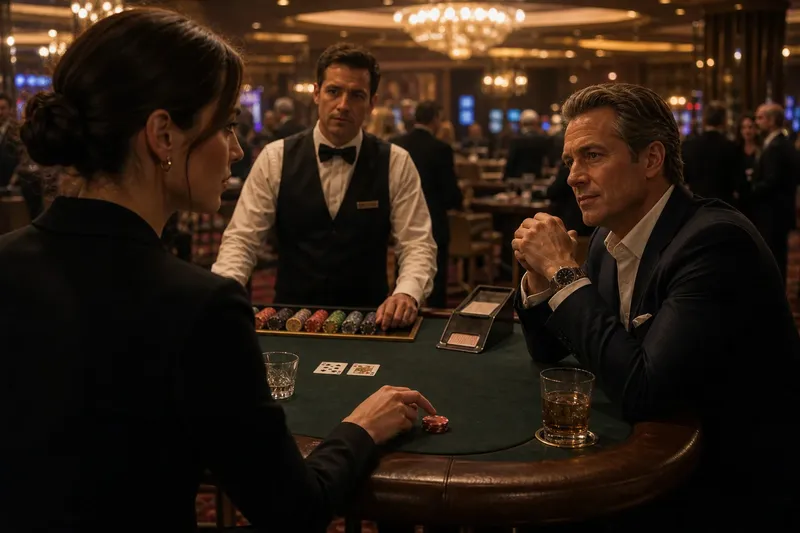
Imagine a clearly invented scene: Mara, an ambitious hotel manager, enters a fictional casino to persuade a powerful investor to back her project. She approaches a blackjack table, places a chip beside the cards and waits for the investor to notice her. By the scene’s end, she has gained his attention but lost control of the conversation. Nothing here should be read as a model for playing blackjack. Instead, the setting gives the filmmaker a compact stage for status, risk and an uneasy negotiation.
Why does the casino make such an efficient story setting?
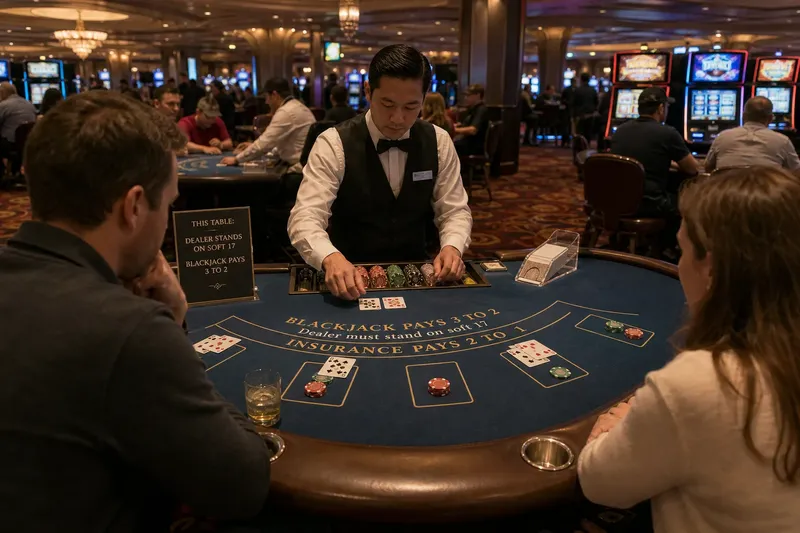
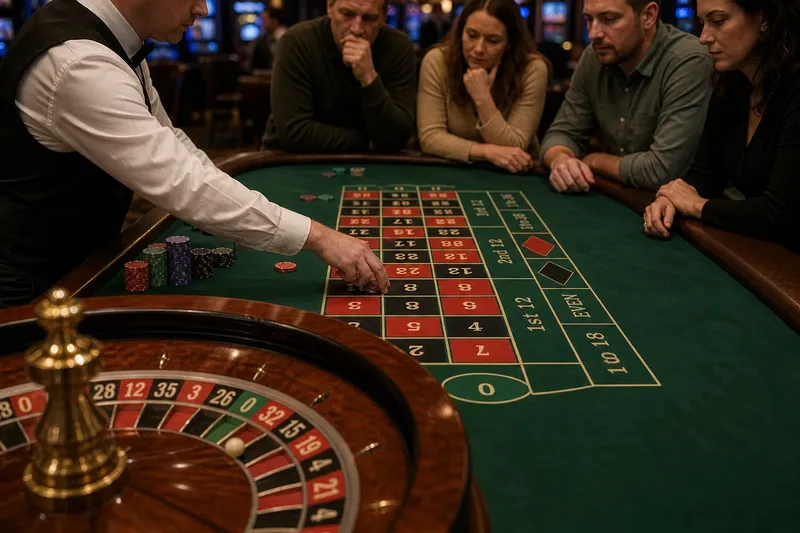
A casino gathers strangers, money, rules and spectators into one charged space. Characters can meet without a private invitation, compete without openly declaring a feud, or reveal confidence with a small gesture. The setting also supplies a ready-made contrast: disciplined routines around the table, unpredictable outcomes within the game.
That contrast helps a scene carry several meanings at once. A character may be trying to win a hand, impress a rival and hide fear. The audience sees the game, but the dramatic question may be whether the character can keep a promise or read a room.
In Mara’s invented encounter, the blackjack table offers a reason for her and the investor to share a space. Its felt surface also separates them: she stands on one side, he sits on the other, and the dealer’s position keeps their exchange public. The table is less a lesson in cards than a piece of blocking that makes power visible.
What do the room and camera tell you before anyone speaks?
Look at where the film places the camera. A wide view may make a character seem small amid chandeliers, gaming tables and passing crowds. A close shot of a hand, chip or watch can make a minor gesture feel decisive. Those choices steer attention and shape mood; they do not establish what a real player should do.
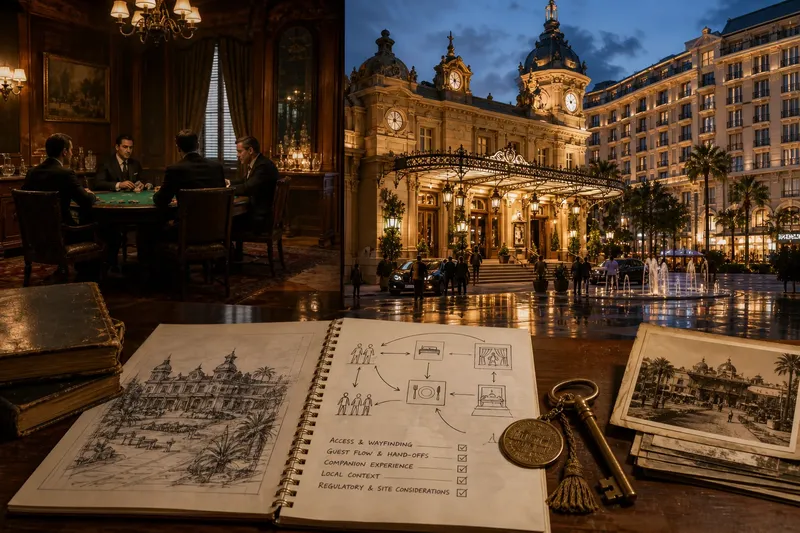
Colour and sound contribute too. Warm light can suggest glamour or a carefully polished illusion. A low hum of conversation may make a room feel busy while leaving one exchange isolated. A sudden cut to a quiet corridor can turn the casino’s bustle into pressure by contrast.
In the invented scene, Mara first appears in a broad shot beneath a bright ceiling. When the investor glances at her, the camera moves closer to the chip she has set down. The chip becomes a visual marker of her attempt to enter his attention, not a signal that she has discovered a profitable tactic.
Notice what the film chooses to show, then ask what that choice makes you feel.
How do chips, clothes and table positions signal status?
Props and costume often work as quick social shorthand. A neat suit, a worn jacket, a guarded stack of chips or an unhurried walk can invite the audience to infer wealth, experience or authority. Those impressions belong to the film’s design. Appearance alone cannot tell a viewer how much someone knows about a game, how much they can afford to lose or what they are thinking.
Table positions are just as expressive. A character who occupies the centre of a group may appear to command attention; someone framed at the edge may seem excluded or watchful. A dealer can function as a neutral presence, a barrier or a quiet witness, depending on how the scene is staged.
In Mara’s fictional scene, the investor’s tailored jacket and relaxed posture make him look at home, while her careful grip on the chip suggests she is measuring her next move. The intended contrast is social confidence versus effortful composure. It says nothing dependable about their actual financial circumstances or skill.
When a film makes status look effortless, treat that as characterisation rather than evidence.
How does a casino scene build tension without teaching play?
Screen tension comes from what the audience wants to know and when the film lets it know. A close-up, a delayed reaction, a cutaway to a watching rival or a pause before dialogue can stretch a moment. The card game supplies a ticking structure, but the story may hinge on a secret, a bluff between characters or the cost of being seen to lose face.
Editing can also compress time. A film may skip routine dealing, linger on a single glance and make the next reveal seem like the natural climax. That sequence is crafted for dramatic clarity, not a faithful account of how play unfolds. A satisfying screen reversal may depend on coincidence, selective information or a rule that the film never explains.
In the invented Mara scene, the investor asks about her project just as the dealer turns over a card. The camera cuts between the investor’s expression and Mara’s still hand. The audience may feel that both conversations are reaching a decision, though the game’s result does not cause the investor’s interest. The parallel timing gives the moment its charge.
What should you ask while watching a film casino?
Is the game result driving the scene?
Check whether the plot changes because of the result or because characters react to one another around it. A win or loss can be a story beat, while the real conflict lies in a promise, a threat or a change in trust.
What does the camera want me to notice?
Track repeated close-ups, long pauses and changes in framing. They often point to a character’s fear, ambition or isolation rather than offering useful information about the game.
Whose confidence is the scene selling?
Notice who speaks, who waits and who gets the final close-up. The film may be presenting a performance of control, which can be very different from actual control over the outcome.
Would this scene work without the casino?
If the central conflict could happen in a restaurant, boardroom or hotel lobby, the casino may mainly supply atmosphere and visual shorthand. If the rules of a particular game are essential, the film still may simplify them for pace, so keep the drama separate from practical guidance.
What changes when Mara leaves the table?
In the invented situation, Mara steps away after the investor agrees to hear her proposal the next morning. She has not secured his backing, and the scene does not claim that a bet caused her opportunity. The visible result is narrower: she has moved a conversation forward, while the investor retains the power to decide what happens next.
As she crosses the casino floor, the camera returns to the wide view from her arrival. The room that once made her look small now frames her exit. That shift gives the audience a sense of changed confidence, even though the surroundings and the rules of the game have not changed.
This imagined start-to-result arc shows how a casino can stage a character’s attempt to gain standing. The chips, cards and lights provide texture; the story’s outcome comes from the meeting between Mara and the investor. Viewers can enjoy the suspense without treating the sequence as a prediction about gambling or a guide to decisions at a table.
How can you separate cinematic drama from real play?
Keep three questions distinct: what the film says about its character, what it suggests about the casino atmosphere and what it actually explains about the game. The first two may be the scene’s main business. The third requires attention to the rules, choices and context the film may leave out.
- Ask whether the scene’s turning point is emotional or procedural.
- Notice when editing skips routine actions to sharpen suspense.
- Read costume and posture as deliberate character cues, not proof of expertise.
- Separate a dramatic win or loss from the wider events that follow.
- When you want to understand a real game, consult its actual rules rather than a film scene.
A film casino is most revealing when you read it as a designed space: a room arranged to make attention, ambition and vulnerability visible. The next time a character leans over a table, watch the faces around them as closely as the cards. That is often where the film’s real wager sits.